Kitchen cabinets can collect grease, fingerprints, food splatters, and dust faster than most people realize. Even if you clean your counters every day, cabinet surfaces often get ignored until the grease buildup becomes noticeable. Over time, this can make your kitchen look dull and feel less fresh.
The good news is that cleaning cabinets does not have to be difficult. With the right products and a simple routine, you can remove grease, protect the finish, and keep your kitchen looking clean and organized.
In this guide, you will learn how to clean kitchen cabinets, the best way to clean kitchen cabinets, and easy methods for cleaning kitchen cabinets without causing damage.
Why Kitchen Cabinets Get So Greasy
Kitchen cabinets are constantly exposed to:
- Cooking oil
- Steam
- Smoke
- Food splashes
- Dust and dirt in the air
When grease mixes with dust, it creates a sticky layer that becomes harder to remove over time. Cabinets near the stove usually get dirty the fastest, but even cabinets farther away can slowly collect grime.
This is why regular cleaning is important, especially if you want your cabinets to last longer and maintain their original appearance.
The Best Way to Clean Kitchen Cabinets
The best way to clean kitchen cabinets is usually the simplest one. Warm water mixed with a small amount of dish soap works extremely well for removing dirt, fingerprints, and grease without harming most cabinet finishes. Dish soap is designed to break down oil, which makes it highly effective for kitchen cleaning.
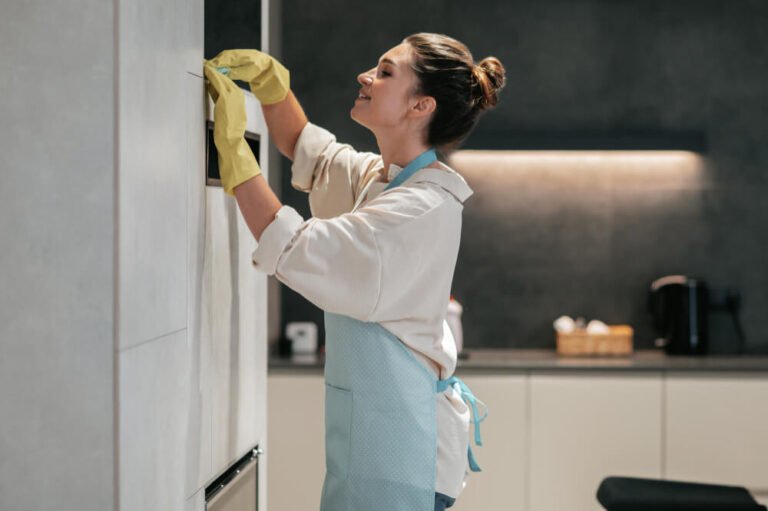
Start by filling a bowl or bucket with warm water and adding a few drops of dish soap. Dip a soft microfiber cloth or non-abrasive sponge into the mixture and gently wipe the cabinet surfaces. Focus especially on areas around handles and near the stove where grease tends to collect more heavily.
Once the dirt and grease are removed, use another clean damp cloth to wipe away any soap residue. Afterward, dry the cabinets with a soft towel. Drying is important because leaving moisture on cabinet surfaces for too long can sometimes damage the finish, especially on wooden cabinets.
This method is simple, affordable, and safe for regular cleaning. It also works well for both light maintenance and deeper cleaning sessions.
How to Clean Grease Off Kitchen Cabinets Naturally
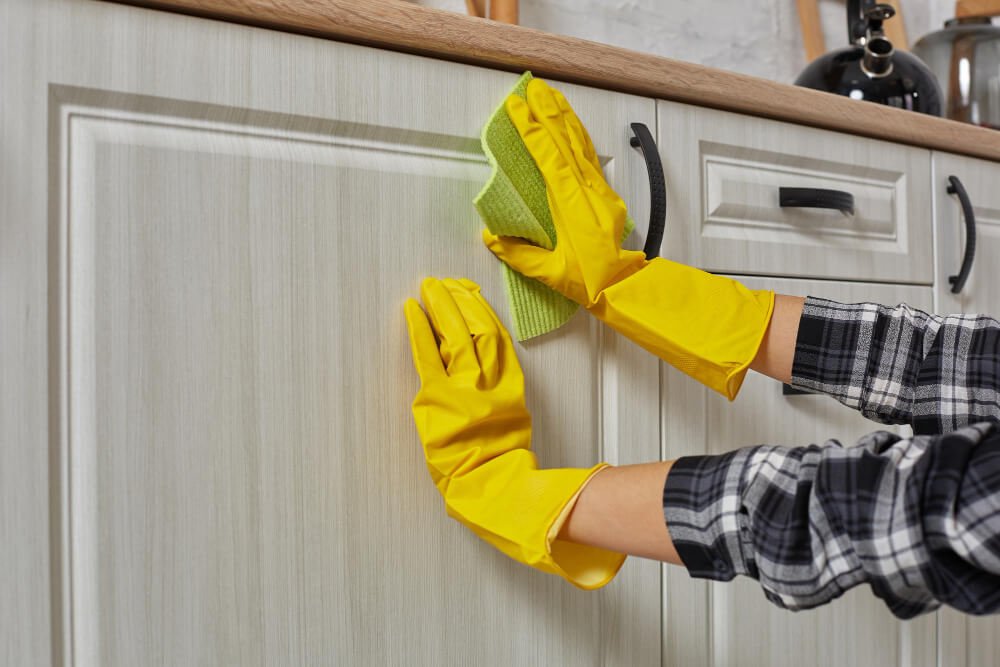
Some people prefer natural cleaning methods instead of store-bought products. If you want to know how to clean grease off kitchen cabinets naturally, vinegar and baking soda can help with light grease buildup.
Vinegar Cleaning Method
Instructions
- Mix equal parts white vinegar and warm water in a spray bottle.
- Lightly spray the greasy area.
- Wipe with a soft cloth.
- Dry immediately afterward.
Vinegar can help cut through grease, but it should not be overused on delicate wood finishes.
Using Baking Soda for Stubborn Grease
For thick or sticky grease spots, baking soda can provide extra cleaning power.
How to Use It
- Step 1 Make a Paste: Mix baking soda with a small amount of water.
- Step 2 Apply Gently: Use a soft cloth to apply the paste to greasy spots.
- Step 3 Rub Carefully: Gently scrub without scratching the surface.
- Step 4 Wipe Clean: Remove the paste with a damp cloth and dry the cabinet.
This method works best for small stubborn areas rather than full cabinet cleaning.
Common Cleaning Mistakes to Avoid
While cleaning kitchen cabinets may seem simple, some common mistakes can accidentally damage the surface or make cleaning more difficult.
One of the biggest mistakes is using too much water. Cabinets are not designed to stay wet for long periods, especially wooden ones. Excess moisture can cause swelling, peeling, or weakening of the finish over time.
Another mistake is scrubbing too aggressively with rough brushes or steel wool. Harsh scrubbing can scratch painted surfaces or remove protective coatings from wood cabinets. Soft clothes and non-abrasive sponges are always the safer option.
Many people also use strong chemicals thinking they will clean faster. In reality, harsh cleaners can sometimes discolor cabinets or leave permanent damage behind. Mild cleaners are usually more than enough for normal grease and dirt.
Forgetting to dry the cabinets after cleaning is another common issue. Even a good cleaning method can leave streaks or moisture damage if water is allowed to sit on the surface.
How Often Should You Clean Kitchen Cabinets?
The frequency depends on how often you cook.
- Weekly Cleaning: Light wiping once a week helps prevent grease buildup.
- Monthly Deep Cleaning: A more detailed cleaning once a month keeps cabinets looking fresh.
- Immediate Spot Cleaning: Always clean oil splatters and spills as soon as possible.
Regular maintenance makes deep cleaning much easier later on.
Tips to Keep Cabinets Cleaner Longer
Preventing grease buildup is often easier than removing it. A few small habits can help keep cabinets cleaner for longer periods.
Using the range hood while cooking can reduce airborne grease particles that normally settle onto cabinet surfaces. Cooking at lower temperatures can also reduce oil splatter around the kitchen.
Cleaning spills and splashes right away prevents grease from hardening onto the cabinets. Regularly wiping cabinet handles is also important because they collect oils and dirt from hands throughout the day.
Good kitchen ventilation can make a noticeable difference as well. Proper airflow helps reduce both grease and moisture buildup in the cooking area.
These simple habits may seem small, but they can greatly reduce how often deep cleaning is needed.
Final Thoughts
Learning how to clean kitchen cabinets properly can completely improve the appearance of your kitchen. Cabinets are one of the largest visible surfaces in the room, so when they are greasy or dirty, the entire space can feel less clean.
For most homes, the best way to clean kitchen cabinets is still the simplest one: warm water, mild dish soap, and a soft cloth. This method safely removes grease, fingerprints, and dirt without damaging most cabinet finishes.
Whether you are figuring out how to clean wood kitchen cabinets, how to clean greasy kitchen cabinets, or how to clean grease off kitchen cabinets naturally, consistency is the key. Gentle regular cleaning is far more effective than waiting until heavy grease buildup becomes difficult to remove.
With the right approach, your cabinets can stay cleaner, brighter, and in better condition for years to come.